
Beyond a Reasonable Doubt
Marian Apparitions and the Irrationality of Disbelief in Their Authenticity

The New Digest is delighted to welcome this guest post from Thomas H. Bickel. He holds a B.A. in Political Theory from Brown University, recently served as Legal Advisor to a prominent U.S. Senator, and currently works for the U.S. Commission on Civil Rights. The views expressed here are his own and do not reflect those of any current or former employer. An avid tennis player, he can be reached at thomas_bickel@alumni.brown.edu for feedback.
“The object of opening the mind, as of opening the mouth, is to close it again on something solid.”
— G.K. Chesterton
I. Introduction – The Stakes of Disbelief
Let us think about this soberly. If Christianity is true, then ignoring God is not merely an error. It is the most catastrophic error a human being can make. Pascal’s Wager, while disturbing, remains logical: if God and the supernatural are real, then failure to believe in this reality is not safe—it could result in eternal damnation. Therefore, even a sliver of credible evidence for either of these things should arrest our attention. What we face, however, is far more than a sliver.
From the visions of the Hebrew prophets to the oracles of Greece, medieval mystics to the Aztecs, and all the way to modern-day witnesses, almost every culture in history has operated on the assumption that the supernatural is not only real, but also directly involved in human affairs.
Yet skeptics continue to demand from supernatural claims what they demand from nothing else: complete understanding. It is not enough that an event defies natural explanation, is attested to by credible observers, and yields lasting effects. They press ancillary questions—Why here? Why now? Why in this form? How exactly does x work? How can x be replicated?—and when such questions cannot be answered with precision, they treat these unknowns as grounds for disbelief.
But this is a category error. Supernatural phenomena, by their very definition, go beyond nature—not merely by seeming to violate physical laws, but by revealing a deeper order behind them. Accordingly, they involve mystery, and they necessarily resist complete understanding because they participate in a higher order that transcends material causation and the visible world. To disbelieve an alleged event on the basis that it lies beyond human understanding, then, is to demand that the supernatural cease being what it is. Moreover, such epistemic rigor tends to be applied selectively. We trust modern medications without understanding their mechanisms or long-term side effects, believe in the historicity of events that we didn’t witness ourselves, and rely on scientific models that, by definition, are provisional and acknowledge the possibility of error. In nearly every domain of life, we operate not on absolute certainty, but on reasonable confidence grounded in the weight of accumulated evidence. What matters is not complete understanding of phenomena then, but our willingness to follow evidence wherever it leads.
II. When Testimony Converges Toward Certainty
In American law, two standards of proof govern how we assess contested claims. The first, preponderance of the evidence, asks whether something is more likely true than not—a modest 51% threshold used in civil cases, where the consequences of error are less severe. The second standard, beyond a reasonable doubt, is used in criminal trials, where the cost of the jury being wrong could put an innocent man to death. This latter threshold does not demand certainty, but it sets the bar much higher: the body of evidence to convict must be found to be so compelling that doubt is no longer reasonable. These standards are not abstractions. They reflect how we live—how we decide, judge, and act when complete understanding is unattainable. We are not paralyzed by mystery; with some epistemic humility, we move forward when the evidence converges on one explanation and renders rival explanations so unlikely as to be unreasonable.
Many claims of supernatural phenomena, if thoroughly investigated, involve evidence that may satisfy the lower threshold. But the three Marian apparition cases that follow do something more rare—their scale warrants asking whether the evidence is compelling beyond a reasonable doubt.
Given the extraordinary nature of these apparitions—and how well-documented and well-corroborated each one is—one might expect them to provoke intense public scrutiny and sustained interest. Yet in our modern culture that dissects headlines, parses data, and elevates even the most trivial controversies to matters of national importance, Marian apparitions remain curiously overlooked. As astonishing as they are, and as consequential as their implications may be (i.e., with some considering these apparitions to point towards the truth of Christianity or Catholicism), these historical events are seldom granted serious consideration beyond insular religious circles.
So let us recall the reported facts of each of these cases, then—and allow reason to guide us to a proper conclusion.
III. LOURDES:[1]
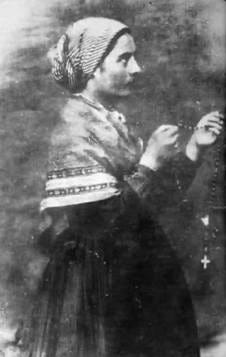
In 1858, 14-year-old Bernadette Soubirous—a poor, sickly, and illiterate peasant girl from Lourdes, France—began reporting visions of a mysterious “Lady” in a grotto as she prayed her rosary there. The apparitions triggered public uproar, drew the attention of government officials, and led to one of the most thoroughly documented and enduring unexplained phenomena in modern history. Despite being interrogated by police, threatened with imprisonment, and pressured by both clergy and skeptics, Bernadette maintained her account. She described the Lady in vivid detail—clothed in white with a blue sash, and yellow roses at her feet—and during the apparitions, fell into ecstasies so profound that she was insensible to external stimuli. Eyewitnesses, including physicians and state officials, recorded how she remained calm and unflinching as a burning candle scorched her hand. Hundreds of villagers attested to these events, many in writing. During one apparition, the Lady identified herself with the words, “I am the Immaculate Conception”—a theological term Bernadette did not understand, and could not have invented, having never heard it before. In another vision, at the Lady’s direction, Bernadette dug into a particular spot in the ground and uncovered a hidden spring that instantly began flowing. Since then, more than 7,000 miraculous cures have been reported in connection with this spring water, leading to the establishment of the Lourdes Medical Bureau, a permanent medical commission charged with evaluating such claims. The bureau is composed entirely of physicians—many of whom are non-Catholics or skeptics—whose purpose is to play ‘devil’s advocate,’ investigate, and rule out any natural explanation before a case can proceed further. Of the thousands reviewed, 70 claims have withstood this rigorous process and have been formally recognized by the Catholic Church as miracles. Bernadette sought neither fame nor reward; she entered a convent, lived in quiet obscurity, and died at age 35. Her body, exhumed multiple times, was found to be incorrupt, and remains so today—more than 140 years after her death.
IV. FATIMA:[2]
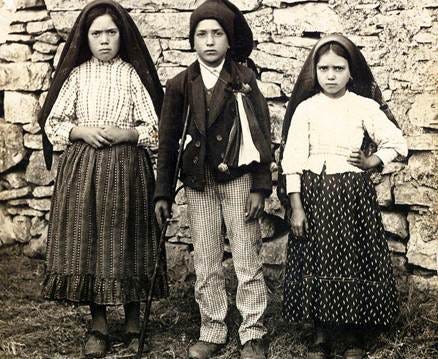
In 1917, three shepherd children began experiencing apparitions of a luminous Lady in the fields of Fátima, Portugal, amid a period of political unrest and militant secularism. The children—ages 7, 9, and 10 at the time—were from poor, rural families and lacked formal education, yet they provided consistent, detailed accounts of the apparitions to both their families and fellow villagers. Word spread. A local government official detained them under the pretext of investigating the public disturbance the children’s claims had caused. He imprisoned them with adult criminals, threatened to boil them alive, and falsely told each that the others had already been killed—attempting to force them to reveal the Lady’s secrets or recant their testimony. Nevertheless, the children continued to obey the Lady and to return to Her. Six apparitions occurred between May and October 1917, with the August apparition delayed because of the children’s imprisonment. During these spectacles, witnesses observed the children slip into deep trances while reciting the rosary, unresponsive to what was happening around them. The crowds, with some reporting physical healings in the presence of the children, continued to build. By autumn, anticipation had reached a fever pitch. Word of a “promised sign” had spread across Portugal, drawing the devout, the curious, and the hostile alike. The Lady’s messages—urgent calls to prayer and penance and prophesying world events—culminated in a promise that on October 13th, there would be a public miracle unveiled for all to witness. That day, it is estimated that over 70 thousand gathered in a muddy field under torrential rain—including skeptics, scientists, and journalists from out of town. What transpired came to be known as the “Miracle of the Sun”: the sun broke through cloud cover, spun rapidly, changed colors, and plunged toward the earth before returning to its place, while the soaked ground and crowd dried instantaneously. The phenomenon was reported in detail by multiple Portuguese newspapers—including O Século, the nation’s leading secular newspaper—and was noted in other international press outlets. Several black-and-white photographs also depict the extraordinary crowd assembled that day. The prophecies shared with the children—fortelling the rise of Communist Russia, the outbreak of World War II, and future persecution of the Church—were each fulfilled with pinpoint accuracy. Sister Lúcia dos Santos, the oldest child, lived to age 97 and testified to the veracity of her encounter with the Blessed Virgin Mary until her death on February 13, 2005.

V. ZEITOUN:[3]
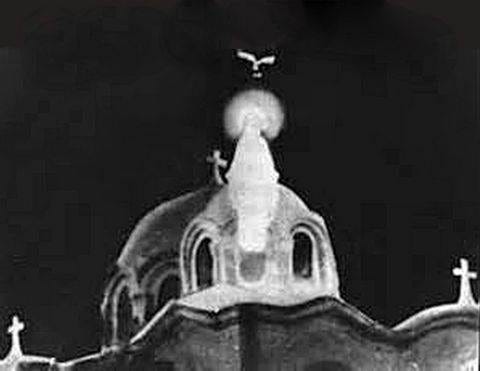
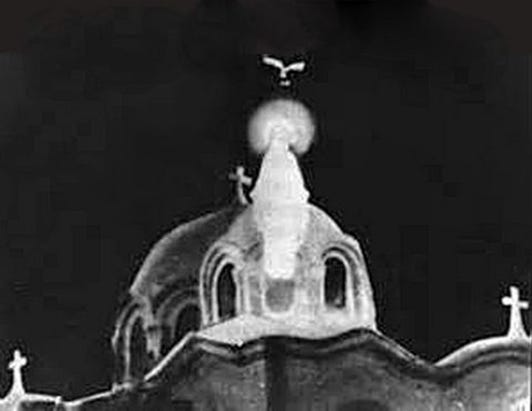
In 1968, a series of an estimated 94 apparitions began atop the Coptic Orthodox Church of Saint Mary in Zeitoun, a suburb of Cairo, Egypt, for a period of roughly three years. Interestingly, this apparition was allegedly foretold twice: the church’s founder reportedly built it after a dream-vision in which Mary promised She would appear there and work a miracle, and, in 1962, a Lithuanian visionary at Janonys, near Skiemonys, recorded Mary saying She would “[at some later time] appear in Egypt with angels.” Whatever one makes of these precursor claims, the Zeitoun apparitions themselves were witnessed by roughly a million people, including Muslims, Christians, atheists, government officials, doctors, and skeptics—many of whom documented the events as they occurred intermittently and unpredictably. The apparition was not private to any one person or group of people—it was public and visible to the masses, with reports describing a luminous, full-bodied figure of a woman believed to be the Blessed Virgin Mary, hovering above the church, surrounded by white doves, often for hours at a time. She was sometimes seen bowing in prayer, slowly pacing atop the church roof, extending her hands in silent benediction, and even kneeling before the cross on the roof. The phenomena were photographed, filmed, and reported in both Egyptian and international media, including The New York Times, making it one of the most well-documented unexplained events of the 20th century. Eyewitnesses and local physicians also reported that some were physically healed after praying during the apparitions. In response to such widespread commotion and intrigue, the Egyptian government—which was then led by President Gamal Abdel Nasser, a Muslim—commissioned an investigation. In an effort to debunk the alleged sightings as artificial light projections, authorities cut off electricity to the area around the church—including neighboring districts—during apparition times. To their bewilderment, the luminous figure continued to appear, undeterred by the blackout. Police investigators were unable to find any device within a radius of fifteen miles capable of projecting the image. This is not to mention that a free-floating, three-dimensional, viewable-from-all-angles ‘hologram’ of such scale was beyond any projection technology known or available in the 1960s, and remains beyond what we know can be produced today. With no natural explanation to account for what was witnessed by hundreds of thousands of people, the Egyptian government ultimately accepted the authenticity of the apparitions.
VI. Conclusion – The Irrationality of Disbelief
The Catholic Church, in Her wisdom, subjects reported miraculous phenomena to the utmost scrutiny. Lourdes was declared “worthy of belief” in 1862, only after four years of rigorous and methodical investigation; likewise, the Fátima apparitions received the same declaration in 1930 following thirteen years of deliberation. Although Pope Paul VI sent two Vatican envoys to observe the Zeitoun events firsthand, because the apparitions occurred atop a Coptic Orthodox church outside Rome’s jurisdiction, the Holy See never issued a formal judgment on them.
Even still, the Church does not require any of these alleged apparitions to be believed in as a matter of doctrine. Rather, the Church’s declarations serve as invitations: to consider the evidence, and to believe if one finds the testimony persuasive and edifying.
So let us consider them for ourselves, then. After all, there are only four positions one can hold.
1. One may accept the apparitions as authentic.
2. One may reject their authenticity, on the grounds that the phenomena originate from occult practices or “demonic deception”—an apparent “angel of light” attempting to misdirect souls. While this concern is well-founded, the problem is that the observable “fruits” of these apparitions seem to cut against this hypothesis: it is difficult to reconcile why spiritual entities “not of God” would yield prayer, repentance, conversion, hope, healing, and peace when these outcomes are what demonic activity is thought to oppose.
3. Alternatively, one may reject their authenticity on the ground that there is nothing supernatural about these phenomena. It is worth considering what such explanations would entail, however. To maintain this view, one must speculate that a frail, illiterate fourteen-year-old in nineteenth-century France, three shepherd children in rural twentieth-century Portugal, and vast crowds of Muslims and Christians in 1960s Egypt—all separated by culture, language, and time—somehow conspired or fell subject to the same delusion of a “most beautiful woman from Heaven,” accompanied by almost-identical gestures and luminous phenomena; that they maintained their accounts of this “figment of imagination” in the face of ridicule, interrogation, threats of insanity, imprisonment, and death, maintaining composure under questioning that even unsettled their interrogators; that their trances—studied and observed by physicians—were something other than what they plainly appeared to be; that such “private hallucinations” afflicted crowds in perfect synchrony, with many witnesses seeing the same thing at the same time in the same detail; that the events in question happened precisely when foretold as a matter of sheer coincidence; and that, despite being “inauthentic,” these bizarre spectacles nevertheless bore enduring fruits—conversions and inexplicable physical healings that continue to this day.
4. Others will choose to remain perpetually undecided, neither believing nor rejecting. Yet to persist in this position in the face of well-corroborated and well-documented evidence is not, as is too often assumed, a demonstration of epistemic humility. As the evidence mounts, refusal to pick a side increasingly becomes an act of willful rejection.
And so the question remains: what is more plausible—that these unexplained events are all part of a vast, perfectly-orchestrated, man-designed conspiracy? That all these events are merely coincidental despite how fantastically and inordinately improbable that is? Or that the Blessed Virgin Mary, unbound by any natural limitations, simply revealed Herself on these occasions?
There is nothing virtuous about remaining open-minded in the face of overwhelming evidence. It is time, as Chesterton implores us, to close our minds on something solid.
Source: https://www.thriftbooks.com/w/saint-bernadette-soubrious-1844-1879_francis-1877-1967-trochu/38425562/item/86807412/?utm_source=google&utm_medium=cpc&utm_campaign=low_vol_backlist_standard_shopping_customer_acquisition_16919871551&utm_adgroup=&utm_term=&utm_content=593241238718&gad_source=1&gad_campaignid=16919871551&gbraid=0AAAAADwY45hDg_1e0sw_a5Q1UfZMDx53O&gclid=Cj0KCQjwjL3HBhCgARIsAPUg7a4MbRAJCdRe8NzSIEKe8yN5HJpt_d3UQsksBIKHylWyX4AKzjwrOfkaAspdEALw_wcB#idiq=86807412&edition=65725591
Source: https://a.co/d/i4OQLtb
Source: The Marian Apparitions at Zeitoun: An Evidential Inquiry by Travis Dumsday
 | A guest post by
|
With Carlos Eire’s book, They Flew, and supporting scholarship that it references, perhaps contemporary thought is finally receiving such phenomena without its reductive scienticism.